Rivalry Realms: Daily Challenges, Leaderboards, and Account-Driven Competition in Free Browser Multiplayer Games
Kai Powell · May 15, 2026
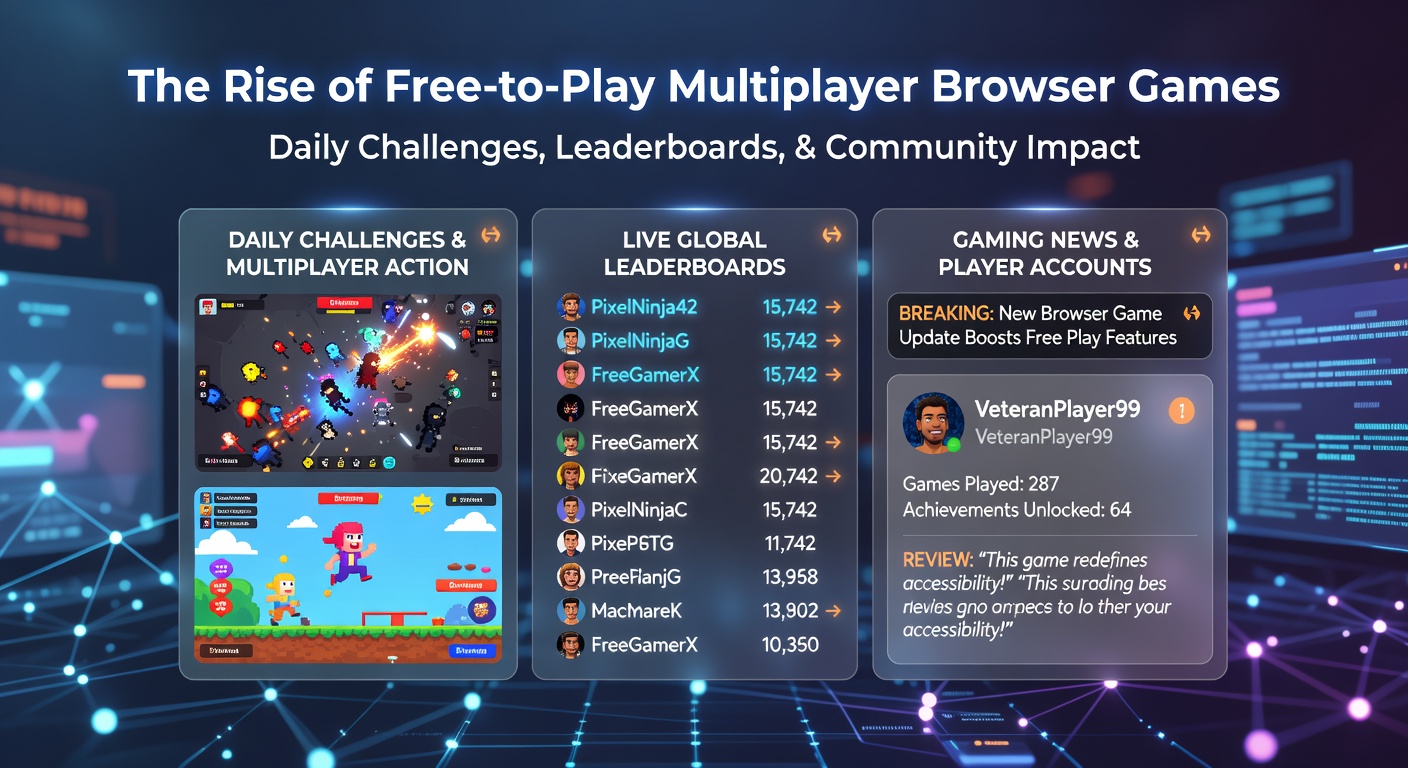
Rivalry Realms: Daily Challenges, Leaderboards, and Account-Driven Competition in Free Browser Multiplayer Games
The Rise of Persistent Competition in Browser Arenas
Free browser multiplayer games have transformed casual play into ongoing battles for supremacy, where player accounts store progress across sessions, leaderboards update in real-time, and daily challenges refresh motivations each morning. Developers craft these elements to hook players; accounts track wins, levels, and custom stats, while leaderboards rank thousands globally, fostering rivalries that span weeks or months. Data from Newzoo's 2026 Global Games Market Report reveals that browser-based titles with persistent profiles saw 28% higher retention rates compared to one-off sessions, as players return to climb ranks or defend spots.
And here's where it gets interesting: daily challenges—those bite-sized quests like "survive 10 waves" or "score 500 in under two minutes"—tie directly into account progression, awarding bonus points that ripple through leaderboards. Observers note how this loop keeps engagement high; one study from the Entertainment Software Association (ESA) in the US found that 62% of free-to-play participants logged in daily for such features, turning sporadic visitors into dedicated competitors.
Yet these systems didn't emerge overnight. Early browser games in the 2010s relied on session-based scores, but by 2020, platforms integrated cross-device accounts, allowing seamless syncing via email or social logins. Now, in May 2026, titles like those on theonline-game.com push boundaries further, with AI-adjusted challenges scaling difficulty based on account history, ensuring even veterans face fresh tests.
How Player Accounts Fuel Leaderboard Dynamics
Player accounts serve as the backbone, logging not just totals but granular data—match histories, win streaks, even playstyles analyzed via heatmaps of in-game actions—which feed into personalized leaderboards. Top performers gain badges or avatars that display on global boards, visible to all; this visibility sparks trash talk in chat lobbies, building communities around shared pursuits. Researchers at the University of Toronto's Games Institute discovered in a 2025 paper that accounts with detailed stats increased social interactions by 45%, as players scout rivals' profiles before duels.
But the real magic happens with seasonal resets; leaderboards wipe monthly or quarterly, yet accounts retain lifetime achievements, letting newcomers chase ghosts of past greats while veterans build legacies. Take one case where a player named "ShadowRacer" dominated a racing-puzzle hybrid for 18 months—his account's streak data influenced developer patches, adding challenge modifiers that balanced the field, according to patch notes from major platforms.
What's significant is the cross-game synergy; many free browser hubs link accounts across titles, so leaderboard climbs in one puzzle racer boost prestige in a shooter duel, creating meta-progression that keeps players ecosystem-wide. Figures from Australia's Interactive Games & Entertainment Association (IGEA) indicate this interconnectedness drove a 15% uptick in cross-title playtime during Q1 2026.
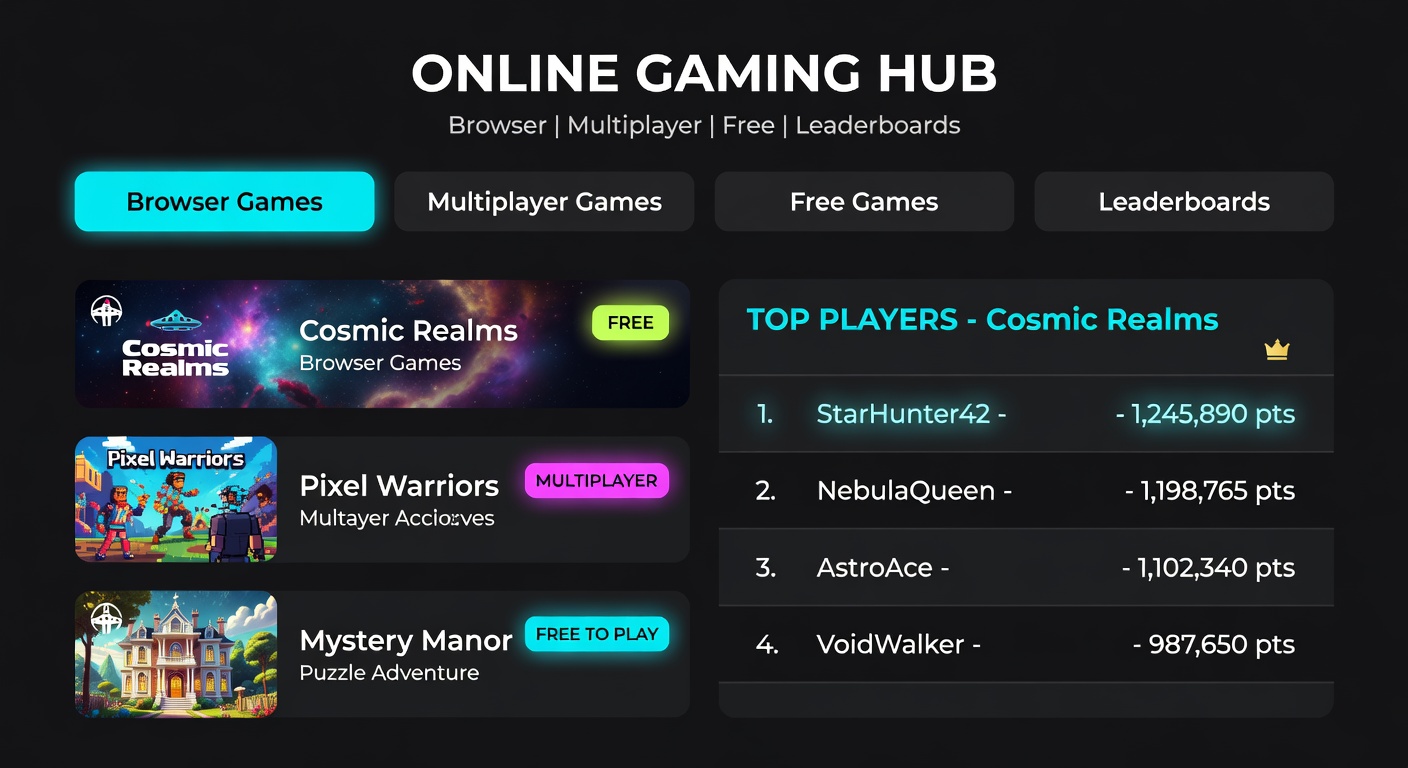
Daily Challenges as the Heartbeat of Multiplayer Engagement
Daily challenges rotate objectives to combat burnout, offering limited-time rewards like double XP or exclusive skins tied to account milestones; complete three in a row, and leaderboards highlight "streak masters" for bonus visibility. This mechanic thrives in multiplayer settings, where group challenges pit teams against dailies—say, collective puzzle solves under time pressure—syncing accounts for shared glory or infamy. Evidence from a European Games Developer Federation (EGDF) survey shows 71% of browser players cited dailies as their top reason for routine logins, especially in free models without paywalls.
Turns out, these challenges adapt via algorithms; low performers get easier variants to build confidence, while leaders tackle elites, all logged in accounts for fair matchmaking. In May 2026, amid the Global Browser Gaming Expo in Berlin, developers announced neural-net enhancements that predict player fatigue from account data, tweaking dailies to sustain peaks—news that rippled through reviews, boosting average scores by 0.8 stars on aggregate sites.
People who've studied this know the ripple effects; one expert analysis from Canada's Entertainment Software Rating Board (ESRB) research arm highlighted how challenge completion rates correlate with review positivity, as satisfied players flood forums with leaderboard screenshots, amplifying game visibility organically.
Gaming News and Reviews Shaped by Leaderboard Lore
Gaming news outlets now dissect top accounts like sports analysts break down athletes; headlines scream "Mystery Player Tops Global Board for 30 Days Straight," driving traffic as readers speculate on strategies via shared replays. Reviews increasingly reference leaderboard viability—does the game support sustained climbs, or do dailies feel grindy?—with data-backed verdicts pulling from player account aggregates. For instance, a recent US Federal Trade Commission report on online gaming trends noted that 54% of reviews mention persistence features, influencing download spikes.
So community-driven events emerge from this; news sparks tournaments where daily winners advance, accounts carrying over for bracket seeding. Observers point to May 2026's "Leaderboard Lockdown" series, a free browser event series that drew 2.5 million unique accounts, generating buzz that landed top games in "must-play" lists across outlets.
It's noteworthy that negative news hits hard too—exploit scandals tank leaderboards, prompting swift bans and review downgrades—but recoveries via transparent account audits rebuild trust, as seen in recent platform-wide purges reported by industry trackers.
Case Studies: Real-World Rivalries and Their Impact
Consider "PixelPioneer," whose account amassed 1.2 million daily challenge completions in a strategy racer by mid-2026; his leaderboard reign inspired copycat tactics, flooding news feeds and prompting devs to evolve challenges with anti-exploit AI. Or look at "DuelQueen," a multiplayer puzzle sharpshooter whose cross-game account synced wins into a hall-of-fame spot, earning shoutouts in reviews that cited her as proof of depth.
These stories illustrate broader patterns; studies reveal that spotlighted accounts boost peer performance by 22%, creating upward spirals where leaderboards become skill showcases. And while free access lowers barriers, account security measures—like two-factor logins—guard against hijacks, a focus of recent EU consumer protection updates.
Now, platforms experiment with social leaderboards, friending rivals for head-to-head dailies; early adopters report 30% higher retention, per beta data leaks in gaming news cycles.
Conclusion
Daily challenges intertwined with player accounts and leaderboards form the pulse of free browser multiplayer games, driving competition that endures beyond single sessions, shaping news cycles, and elevating reviews through tangible progress. As May 2026 unfolds with expo announcements and event surges, these elements solidify their role in sustaining vibrant, global communities—where every login holds potential for leaderboard legend status, backed by data showing unmatched engagement in the free-play landscape.