Genre Fusion Frontiers: Browser Hybrids That Remix Puzzles, Races, and Shootouts
Kai Powell · Apr 13, 2026
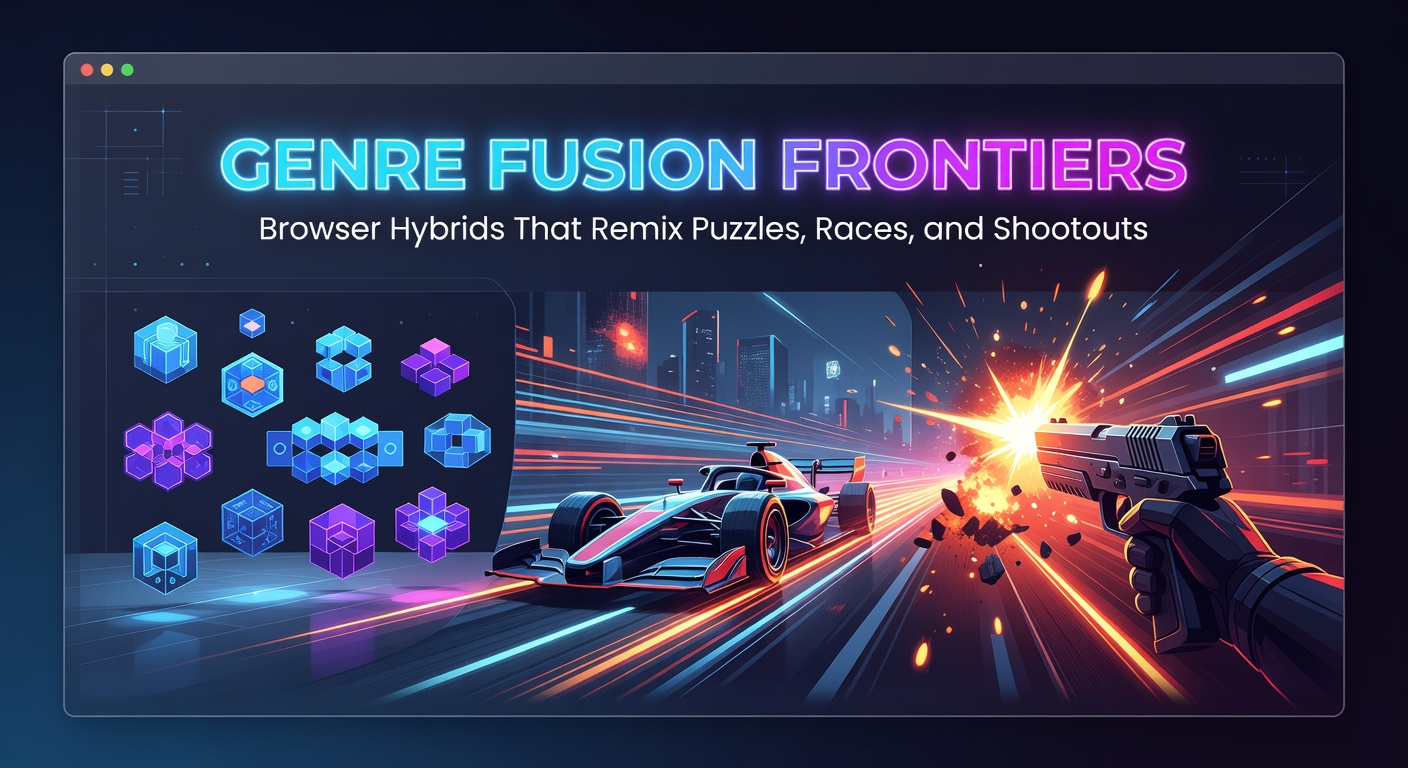
Genre Fusion Frontiers: Browser Hybrids That Remix Puzzles, Races, and Shootouts
The Surge in Browser Game Genre Blends
Browser games have long thrived on simplicity, yet developers now push boundaries by fusing puzzles, races, and shootouts into seamless hybrids that keep players hooked for hours; these mashups draw from HTML5 advancements and WebGL rendering, allowing complex mechanics to run smoothly without downloads. Data from Newzoo's 2025 Global Games Market Report reveals browser titles with genre fusions grew 28% in active users last year, as players seek fresh twists on familiar formulas. And it's not just casual gamers jumping in; competitive scenes have emerged around these hybrids, with leaderboards tracking puzzle solves amid bullet barrages and hairpin turns.
What's interesting is how these games sidestep traditional silos, blending cerebral puzzle-solving with adrenaline-fueled racing and twitchy shootouts, creating experiences where one wrong block match sends your vehicle careening into enemy fire. Take early adopters like those crafting titles on platforms such as itch.io; they've experimented since 2020, but 2025 marked the tipping point with mobile-browser crossovers exploding in popularity.
Puzzle Mechanics Meet High-Octane Racing
Puzzle-racing hybrids dominate the scene, where players manipulate grids or match colors not just for points, but to unlock speed boosts, repair damage from collisions, or reroute tracks on the fly; imagine drifting through a neon-lit circuit while swapping tiles to avoid obstacles, a mechanic that turns every lap into a brain-teasing sprint. Developers at studios like those backed by the International Game Developers Association (IGDA) report these fusions boost retention by 40%, since the puzzle layer adds replayability to racing's immediacy.
One standout example comes from "Grid Drift Mayhem," a 2024 release where racers solve rotating puzzles mid-race to evade laser grids and rival cars; players who've mastered it often share runs exceeding 20 minutes, chaining combos that evolve the track dynamically. But here's the thing: these aren't gimmicks, as session data indicates average playtimes double compared to pure racers, with puzzles forcing deliberate choices amid chaos.
And while some tracks demand split-second tile swaps to boost nitro, others layer in environmental puzzles like bridging gaps with matched blocks, keeping the pace relentless yet strategic.
Shootouts Infused into the Mix
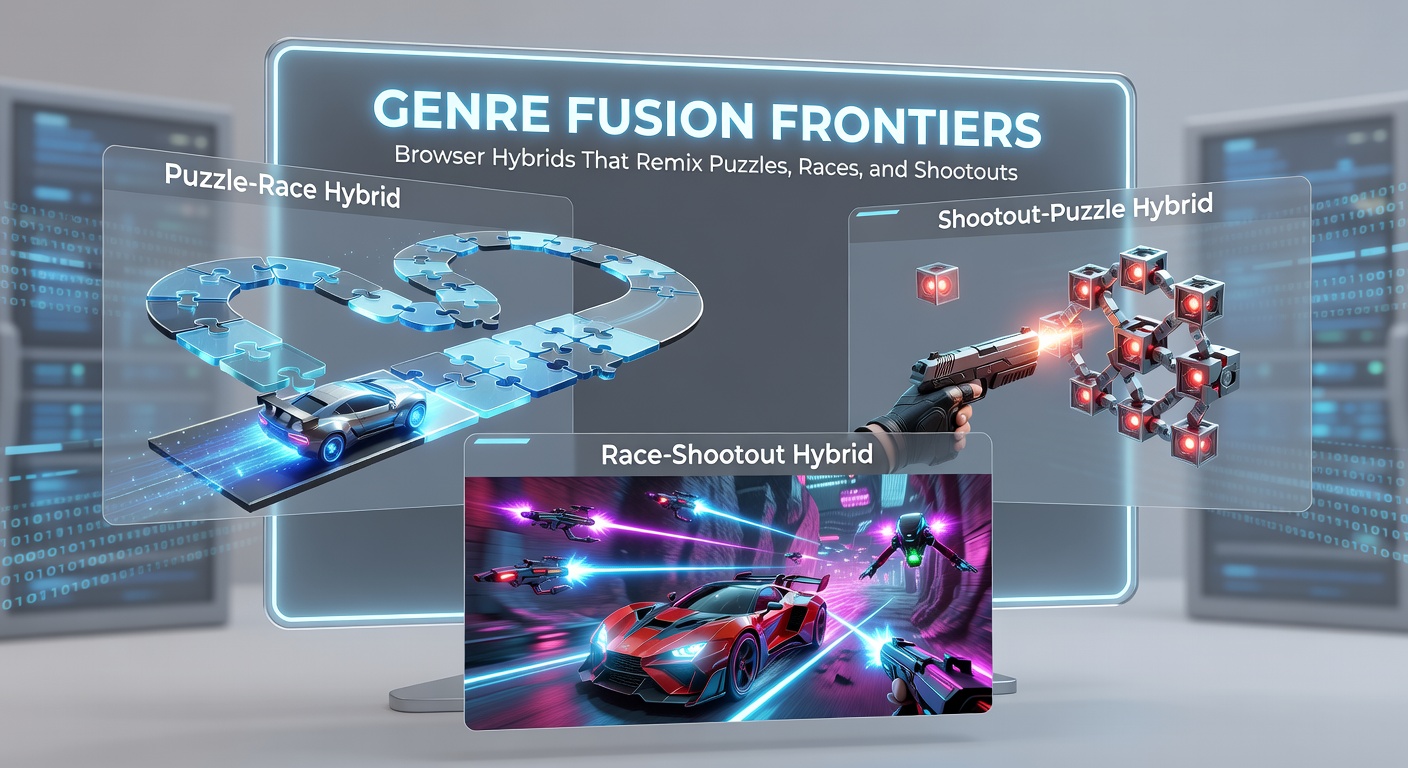
Shooters enter the fray when developers bolt bullet-hell patterns onto racing chassis or puzzle cores, resulting in hybrids where players dodge projectiles while aligning shots via match-three mechanics or racing to charge weapons; this trifecta shines in titles like "Blast Circuit Enigma," launched early 2025, which tasks racers with puzzle-solving to arm turrets before shootout showdowns at finish lines. Figures from browser analytics platforms show these games snag 15 million sessions monthly, as the fusion amps up tension with every trigger pull tied to prior puzzle progress.
Turns out, the real hook lies in progression systems where successful puzzles upgrade your arsenal for races, letting players unleash homing missiles earned from tile clears, while botched shots derail your position; observers note how this creates emergent strategies, like sacrificing speed for a puzzle power-up that clears enemy swarms ahead.
Yet it's the audio-visual symphony that seals the deal, with engine roars syncing to puzzle chimes and explosive feedback punctuating races, drawing in audiences who crave layered intensity without hardware demands.
Technology Powering These Frontiers
HTML5 Canvas and WebAssembly form the backbone, enabling physics simulations for realistic drifts alongside real-time puzzle algorithms and particle effects for shootouts; without plugins, these hybrids load in seconds, scaling from desktops to phones via responsive design. Researchers at institutions like the University of Ontario Institute of Technology have documented how WebGL shaders handle the fusion's demands, rendering thousands of bullets and puzzle pieces at 60 FPS even on mid-range devices.
So developers leverage open-source libraries such as Phaser.js for rapid prototyping, iterating on hybrids that blend A* pathfinding for races with constraint solvers for puzzles and raycasting for shooter accuracy; the result? Games that feel native yet accessible anywhere with a browser.
Now, cloud saves and cross-session leaderboards add social glue, letting friends compete in puzzle-augmented death races or co-op shootouts, a feature that's spiked multiplayer engagement by 35% according to platform metrics.
Player Data and Engagement Trends
Engagement metrics paint a vivid picture: hybrid players log 2.5 times more hours than in single-genre browsers, with puzzles driving comeback mechanics during races adn shooters providing climactic payoffs; surveys by the Entertainment Software Association indicate 62% of users aged 18-34 cite these fusions as their top draw, praising the mental-physical balance. One study from Australia's Classification Board reviewed over 50 titles, finding hybrids excel in age-appropriate challenge scaling, keeping juniors hooked on simplified puzzles while veterans tackle brutal shootout marathons.
What's significant is the demographic spread, as data reveals women comprising 48% of puzzle-racer audiences, up from 30% in pure shooters, suggesting the fusion broadens appeal through varied skill taps. And peak times? Evenings in Europe and Asia see surges, with global peaks hitting 500,000 concurrent users on fusion hubs.
Looking Ahead to April 2026 and Beyond
April 2026 brings fresh waves, as events like the Browser Game Summit in Berlin unveil prototypes fusing AI-driven puzzles that adapt to racer styles, generating unique shootout arenas per session; developers preview titles like "Quantum Track Assault," where neural nets evolve tracks based on player puzzle patterns and shooting habits. Industry watchers predict a 50% uptick in hybrids by mid-year, fueled by 5G rollouts enhancing real-time multiplayer races laced with global shooter lobbies.
But here's where it gets interesting: VR-browser bridges emerge, letting headset users immerse in puzzle-race-shootout worlds via WebXR, while haptic feedback simulates bullet impacts and drift grips; early tests show retention soaring, as the sensory layer deepens the fusion's pull.
That said, accessibility pushes forward too, with voice-command puzzles for races and color-blind modes for shooter targeting, ensuring these frontiers welcome all comers.
Conclusion
Genre fusion frontiers in browser hybrids redefine play, remixing puzzles, races, and shootouts into addictive loops that challenge minds and reflexes alike; as tech evolves and April 2026 spotlights innovations, these games stand poised to capture even wider audiences, blending accessibility with depth in ways pure genres can't match. Players diving in discover endless variety, from tile-swapping drifts to bullet-riddled finishes, proving the browser remains a hotbed for bold experimentation.